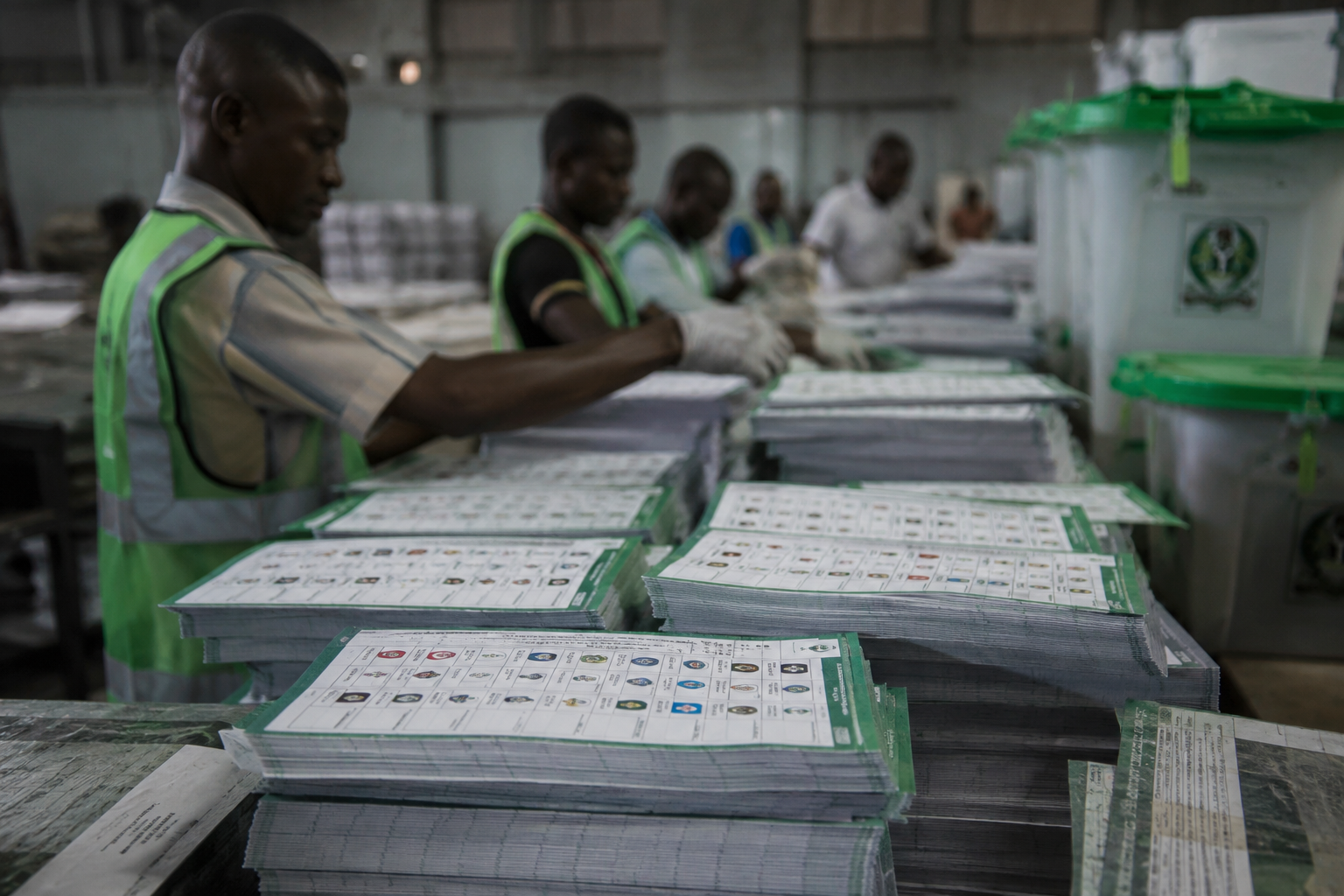
Discussions surrounding Nigeria’s 2027 general elections are beginning to intensify following allegations contained in a circulating investigative publication about ballot printing contracts.
The publication, titled “The Bloody Ballot: Political Cartel,” reportedly raised concerns over possible political influence in the awarding of sensitive election printing contracts ahead of the next presidential election.
Although the claims have not been independently verified or confirmed by any court or regulatory authority, the report has generated broader conversations about electoral transparency and public trust.
According to the publication, questions are now being asked about who should control the production of Nigeria’s ballot papers as election material printing continues shifting toward local firms.
Supporters of local ballot production reportedly believe the move supports Nigerian businesses, improves local technical capacity, saves foreign exchange, and reduces logistics costs tied to offshore printing.
However, critics fear that without strong monitoring systems and independent oversight, local ballot printing could become vulnerable to political interference.
The report further alleged that certain politically connected companies may be positioned to benefit from election printing contracts ahead of the 2027 elections.
Among the concerns reportedly highlighted are alleged lack of transparency in procurement procedures, questions regarding political affiliations of contractors, concerns about accountability, and claims involving previous experience in secure electoral printing.
The publication also reportedly called for stronger oversight from civil society organisations, journalists, and regulatory institutions to ensure public confidence in the electoral process.
It stressed that all allegations contained in the document remain claims unless officially proven through legal or regulatory findings.
Observers following the debate reportedly argued that transparency remains essential in every stage of the electoral process, including procurement, printing, storage, distribution, and result management.
As political activities gradually build toward the 2027 elections, public attention is expected to remain focused not only on candidates and campaigns, but also on the systems responsible for protecting the integrity of the vote.
Source: Nairaland
What do you feel about this post?

Like

Love

Happy

Haha

Sad