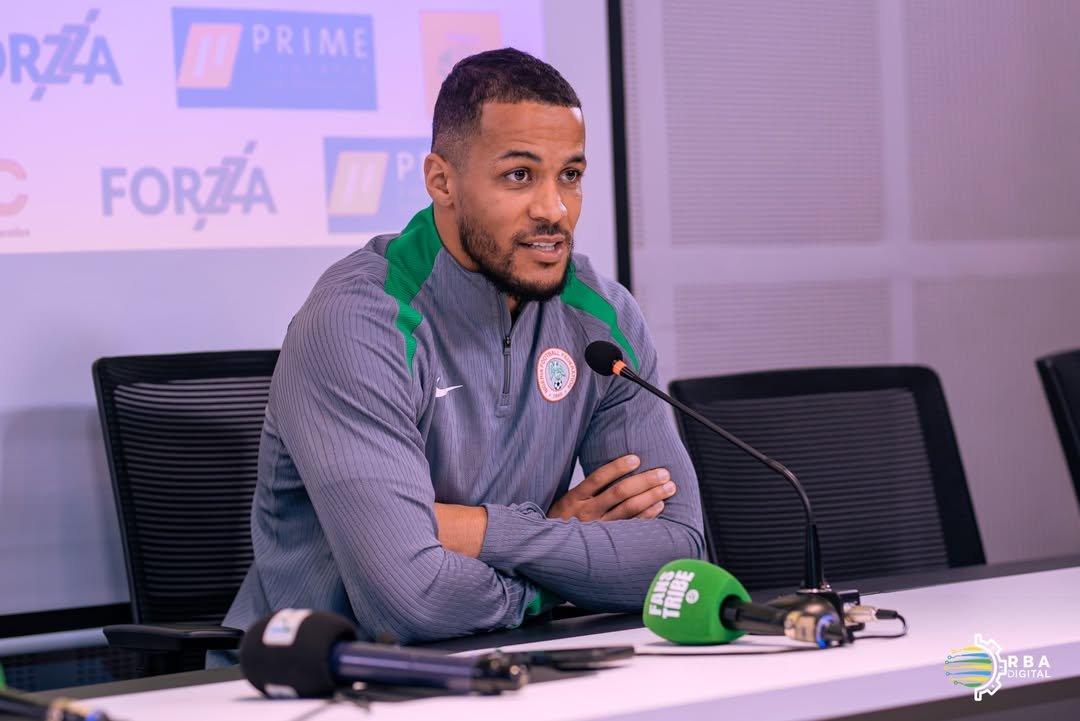
Former Super Eagles captain William Troost-Ekong has called for a renewed approach to Nigeria’s football development, insisting that the team’s failure to qualify for consecutive FIFA World Cups should serve as a turning point rather than a setback.
The defender believes the disappointment can become a catalyst for meaningful reforms as the national team begins preparations for the 2030 World Cup qualifying campaign.
Consecutive World Cup Absences Raise Concerns
Nigeria’s hopes of returning to the FIFA World Cup were dashed after the Super Eagles suffered a penalty shootout defeat to the Democratic Republic of Congo in the African qualifying playoffs.
The result extended the country’s absence from football’s biggest tournament, with Nigeria last appearing at the 2018 FIFA World Cup in Russia.
The back-to-back qualification failures have intensified discussions about the future direction of Nigerian football.
Troost-Ekong Calls for Strategic Reforms
Reacting to the outcome, Troost-Ekong stressed that the Nigeria Football Federation (NFF) must establish a clear long-term strategy if the Super Eagles are to return to the global stage.
According to the former captain, proper planning, improved preparation and honest self-assessment will be essential in rebuilding the team ahead of the next qualification cycle.
He said Nigeria must carefully evaluate recent shortcomings and implement changes capable of improving the team’s competitiveness.
Learning From Disappointment
Troost-Ekong acknowledged that missing another World Cup is painful for both players and supporters.
However, he believes the setback also presents an opportunity to address longstanding issues affecting the national team.
The defender urged stakeholders to use the disappointment as motivation to build a stronger foundation rather than dwelling on recent failures.
Focus Shifts to 2030
With qualification for the next World Cup now becoming the primary objective, attention is expected to shift toward player development, coaching stability and long-term planning.
Supporters will be hoping the lessons from recent disappointments translate into a more organised approach as Nigeria seeks a return to football’s biggest stage in 2030.
What do you feel about this post?

Like

Love

Happy

Haha

Sad